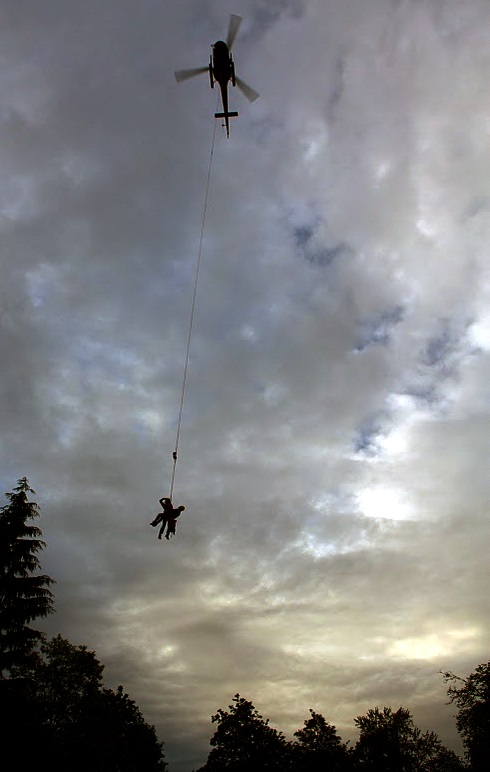

William Fisher Search Review

William Fisher Search Review

The running joke at Comox Valley SAR is that if we're having a social event bring your gear: we're about to have a task. True to form, our last call out occurred on the way to our annual Christmas party.

Mr. William Fisher had left a doctor's appointment in Campbell River, BC on Thursday Dec 1st and had not returned home to Port Hardy. Mr. Fisher's family reported him missing after being unable to reach him Friday. After investigation by the RCMP, it was determined that Mr. Fisher's debit card had been used at the Sayward Junction store north of Campbell River. His car, a white 1995 Chrysler Concord had been seen at the store as well.

Campbell River SAR was activated by the RCMP to help in the search for Mr. Fisher. Based on the information at hand, SAR was requested to search Highway 19 from Sayward to Port Hardy, a distance of approximately 180 kilometers. In the event Mr. Fisher had an accident and was unable to be seen from the road, search crews would likely be able to find his vehicle by walking along the highway.

Due to the distances involved, Campbell River SAR requested mutual aid assistance from Comox Valley SAR and from PEP Air, which has a plane based in Port McNeill.

During the Christmas party, the search managers were already making plans for the next day's search. Comox Valley SAR had recently had an intake of Members-In-Training and the managers requested activation of these MITs to help in the pending road search.

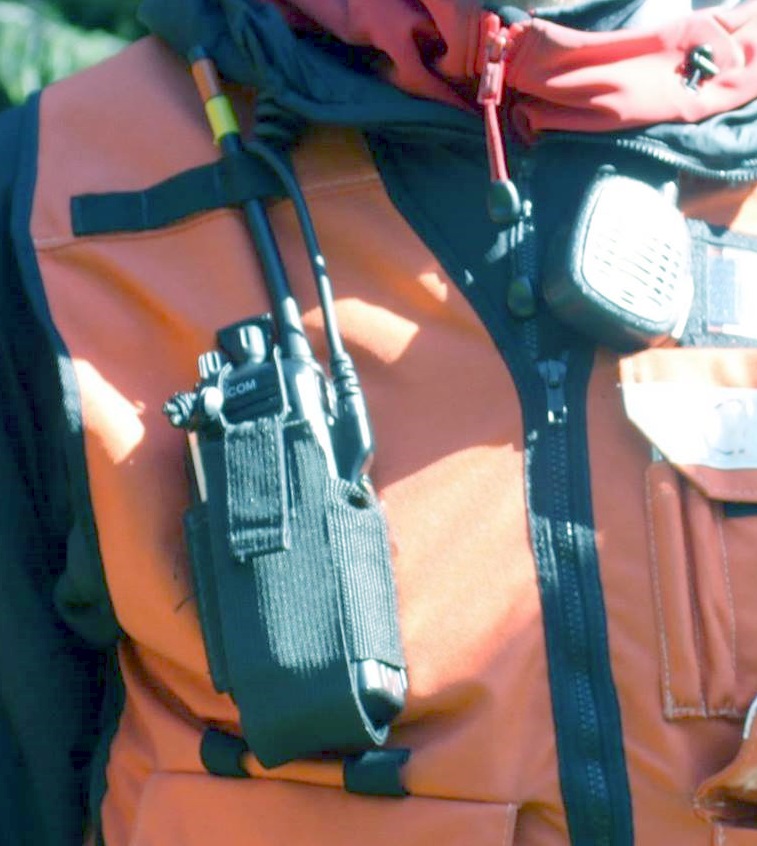
I suggested that the communications crew spend some time after the Christmas party programing our radios to utilize amateur radio frequencies on the amateur radio Island Trunk System. Discussions regarding communications problems over the past year had put CVGSAR on the path to using amateur radio and this search, with its vast search area, would be a perfect application for amateur radio in a SAR operation.

After a few hours of reprogramming mobile, handheld and truck radios, I turned in after midnight to get some rest before meeting the 0600 marshal time with everyone else.

Sunday December 4th

Early morning saw approximately 24 CVGSAR members arrive for the task including Search Managers, team leaders, GSAR members and Members-in-Training. Travelling to Campbell River by carpool, we briefed with the Campbell River search manager on the specifics of the search and then continued on to the first command location at Keta Lake, a rest area north of Sayward on Highway 19.

During the travel to Keta Lake, Campbell River SAR was notified of another task, this time a group of missing sledders out of Sayward. Later on in the day, the sledders were found by RCMP and it turns out they had meant to spend the night outdoors.

Once located at command, teams of 3 (two searchers, one driver) were sent on assignment, basically walking both sides of Highway 19 for seven kilometer stretches, examining ditches and embankments for any sign of Mr Fisher or his vehicle. One team from Campbell River SAR was dispatched on bicycle and was given 20km stretches of highway to cover. As each team finished their portion of highway, they were directed to leap frog the next team north and continue with another portion of highway.

During the highway searches, each team marked the start and end points of their highway portion with three SAR ribbons marked with the date/time, team name and task assignment. This was to minimize confusion between teams on the road and to ensure every inch of highway was searched.

As a trained amateur radio operator, I had volunteered for the post of radio operator in the command post. Two CVGSAR members with amateur radio certificates were dispatched with the search teams along the highway and monitored the Island Trunk System and PEPSAR1, the task working channel. At any time of the day, Command was able to utilize the Island Trunk System and reach the amateur operators in the field. These operators were then able to talk to teams closest to them via a relay on PEPSAR1 and get status reports or give out new task assignments.

Command was moved twice to Nimpkish Camp north of Woss and Seven Hills Rest Area north of Port McNeill in order to stay closer to the teams as they travelled further north from Sayward.

One team was dispatched to drive Highway 30 to Port Alice, though this was considered outside of the target search area. One team did cover a portion of Highway 30 on foot, but the entire highway was not walked due to darkness arriving with an early sunset.

RCMP “Air 8” and a Cessna from PEP Air had also been flying long search patterns close the highway, while RCMP members had been driving logging mains originating at Sayward in the off chance Mr. Fisher had taken a wrong turn or had decided to drive down a logging road.

At the end of the day on December 4th, nothing had been found in connection to Mr. Fisher or his vehicle. Search Management travelled to the Port Hardy detachment of the RCMP to brief the officer in charge. Following the search managers return to Command, teams were debriefed and requested to return the following day to search Highway 19 from Campbell River to Sayward. Perhaps he had gone off the highway south of Sayward?

Monday December 5th

Comox Valley SAR members again marshaled at 0600 and one of the Comox Valley search managers assumed command of the task as no Campbell River SAR managers were available.

Because Monday is a normal work day and fewer SAR members would be available, mutual aid calls were placed the previous evening and teams arrived at Campbell River SAR's hall for 0700. Teams from Nanaimo, Arrowsmith, Alberni Valley and West Coast SAR complimented the teams from Comox Valley and Campbell River. One search manager from Arrowsmith SAR helped out in the command post.

As amateur radio was so successful in keeping teams in touch with command, the same tasking was undertaken with amateur radio operators spread out with teams along the highway.

For the assignments, the decision was made to send some teams directly north to Port Hardy and work southbound on Highway 19, checking likely areas to search. The assignment was to still walk the highway but avoid or skip areas where the terrain was clearly visible and unlikely to hide a large car, such as rock-faces and grassy shoulders.

Other teams were tasked to walk or bicycle both sides of the highway, but starting at the Elk Falls Paper Mill north of Campbell River and working their way north towards Port Hardy. At this point, Command moved to Roberts Lake, a rest area approximately 30 kilometers north of Campbell River.

I was assigned to the field this day, with another amateur radio SAR member taking my place in the command post. I worked personally with two members from Alberni Valley SAR.

During this search day, RCMP “Air 8” was again in the air for the afternoon though PEP Air did not get off the ground in Port McNeill or Nanaimo due to fog and weather concerns. Citizens on Patrol and RCMP from Sayward were also active on this day, searching every logging road to intersect Highway 19 to a distance of 5 kilometers.

After searching the highway and leap-frogging all day with other teams, the call was made to suspend searching around 1630. Search teams working northbound and southbound on Highway 19 had met around the south end of Nimpkish Lake. Command ordered all teams to return to base, which had moved to Keta Lake Rest Area by this time.

Once all teams had returned to command at Keta Lake, we were informed that the RCMP had received a reliable tip of a white car travelling on logging roads north of Campbell River, but south of Sayward. Though this was a few days previous, RCMP considered this a valid tip and search teams were to return in the morning to perform a logging road search.

Tuesday December 6th

Tuesday again brought mutual aid teams to Campbell River SAR's hall for a 0700 marshal time. Due to scheduling conflicts, a search manager was not available from Campbell River or Comox Valley so a search manager from Arrowsmith SAR was pressed into service. Another manager from Cowichan Valley SAR assisted.

With the information from the witness, RCMP and search management decided to search the logging roads that might lead from the point last seen. Search teams comprising members from Campbell River, Comox Valley, Alberni Valley, Arrowsmith and Nanaimo SAR were divided into teams comprising two members per vehicle, with two vehicles per team.

Assigned to various sections of logging road, one vehicle per team would leave the highway and drive to end of the assigned road, mark with ribbon and return to the highway, searching all spur roads where a car such as Mr. Fisher's may have travelled. The second vehicle on the team was to search all spur lines from the highway until meeting up with the first part of the team. Upon meeting each other, the task would be concluded and the full team would return to base for another assignment.

Amateur radio was employed less this day, primarily due to the team's proximity to command. It was used, but nowhere near the extent of the previous two days. Teams were generally able to reach command or relay through another team using PEPSAR1.

I was assigned to team Charlie 1 and was assigned to search the Pye Lake West logging road, searching all spur roads and campsites along the way. During our search of the Pye Lake Forest Recreation site, we noticed a large white object on the other side of the lake but we suspected it was a large rock or cliff face. Gaining a higher vantage point, we were clearly able to determine it was a rock. Note to self: Bring binoculars.

After the completion of our task and return to base, we were debriefed by the search manager and were told that Mr. Fishers vehicle had been found by members of the general public on Highway 30, the road to Port Alice. Subsequent investigation by the RCMP discovered Mr. Fisher deceased inside his vehicle and SAR was put on standby for a possible embankment recovery.

Summary

From the PEP Incident Summary, Dec 5, 2011 - Dec 11, 2011

40 Campbell River, Comox, Nanaimo, Cowichan, Alberni Valley Rescue and Westcoast SAR members and 4 PEP Air continued the search for a missing vehicle with occupant between Sayward & Port Hardy. SAR was stood down after subject was located deceased in the vehicle where it had gone over an embankment.

In the end, no embankment recovery was required and SAR was stood down by the RCMP.

Unfortunately the task had an undesirable result, but hopefully the family has some closure from finding him. My heart goes out the family.

From a SAR perspective, this task was a huge undertaking and covered a massive piece of Vancouver Island.

Search teams walked from Campbell River to Port Hardy, a distance of 230 kilometers, some of it twice.

Comox Valley SAR volunteers committed over 600 person hours to this task, let alone the contributions of the other teams from Campbell River, Cowichan, Arrowsmith, Nanaimo, Alberni Valley, and West Coast SAR. RCMP, PEP Air, Citizens on Patrol and Emcon Services also contributed significant time searching and patrolling the roads and highways of the North Island.

One highlight of this task was the successful use of amateur radio. Amateur radio and the Island Trunk System made this search happen. Search managers were able to keep in touch with all teams at most times and this allows for a greater degree of safety. Walking along a two lane highway in the winter with logging trucks and fast traffic isn't the safest of jobs.

Comox Valley will now be moving full speed ahead with amateur radio training and equipment purchases, in part because this task demonstrated the value of amateur radio for future assignments.

I'd like to thank the Island Trunk System and amateur radio operators everywhere for allowing uninhibited use of the ITS during this search.

Merrick Grieder, VA7VM
Comox Valley Ground Search & Rescue
Comox Valley Emergency Program - Communications

Posted in Blog Entry, Guest Post | Tagged , , , , , , , | Leave a comment

Guest Post tomorrow

A few weeks ago, the tragic story of a search on Vancouver Island was reported in the news. From the information reported in the media, the search seemed to be fairly unique in terms of the distances involved and the communications issues that must have been overcome. A few days later I tweeted a report I had read about how amateur radio had been used to coordinate the search. This piqued my interest even more; 3 days of searching, 300km of roads, lack of cell service... sounds like a logistical nightmare!

I asked an acquaintance of mine who was involved in the search to write up what happened from his point of view, and he agreed to do so.

Tomorrow I'll post the report, written by Merrick Grieder of Comox Valley SAR. As with all search reports I write, we've edited this one so that only information about the subject that was already released to the press by the RCMP is included. The report is from one person's point of vide, someone involved in the search. Other SAR members may have different views, and they are encouraged to comment if they feel like contributing.

Posted in Blog Entry | Tagged , , , | Leave a comment

Archived Avalanche Bulletins

I've always wondered why the CAA's web site doesn't have a link to the archived avalanche bulletins. I could be wrong, but I just can't find it.

It's not a normal thing to want to go back and look at the old bulletins, but let's say I was going to head into an area that I don't usually ski in. I would find it useful to read up on what's been happening there, and the bulletins are an excellent summary of weather information, as well as primary observations on avalanche activity. For a non professional, it's the only way to get access to this data (professionals can get it through the InfoEx).

This week I'm running an avalanche rescue tabletop exercise for our team. It involves three avalanche response scenarios in our area. The idea is that the SAR managers and team leaders get together and plan how the reponse wouldtake place based in the information I give them in the scenario. In the process they use the Avalanche Rescue Response Plan. At the end of the exercise we review the plan for completeness and modify it according to the sugestions the team gives me.

For the excercise I chose three dates in the past month or so for the imaginary incidents to occur. However, I wanted to provide the bulletin and weather forecasts for those dates to make the scenario as real as possible.

It turns out there is an easy way to access the old bulletins if you need to. Here's how:

  1. Go to the page for the avalanche bulletin you are interested in. For me it was Sea To Sky
  2. Click on the RSS link near the top right after the title of the bulletin. The icons looks like this:
  3. Depending on what web browser you're using you'll see different things. For these instructions, use Google Chrome. You may be able to do this using a feed reader (see below). In my brower (Chrome) I get a choice to subscribe to the RSS feed using Google Reader.
  4. Once in Google Reader I can scroll back through all of the previous bulletins and retrieve any one I like.

You may be able to use a different feed reader than Google Reader. This does not seem to work in Internet Explorer or Firefox because they, like the CAA, assume you're only interested in the latest bulletin. You need a reader that will let you scroll back through previous bulletins.

If anyone has any other method they know of to get the previous bulletins, let me know in the comments below.

Posted in Blog Entry | Tagged , , | Leave a comment

On the end of the year and old and new things

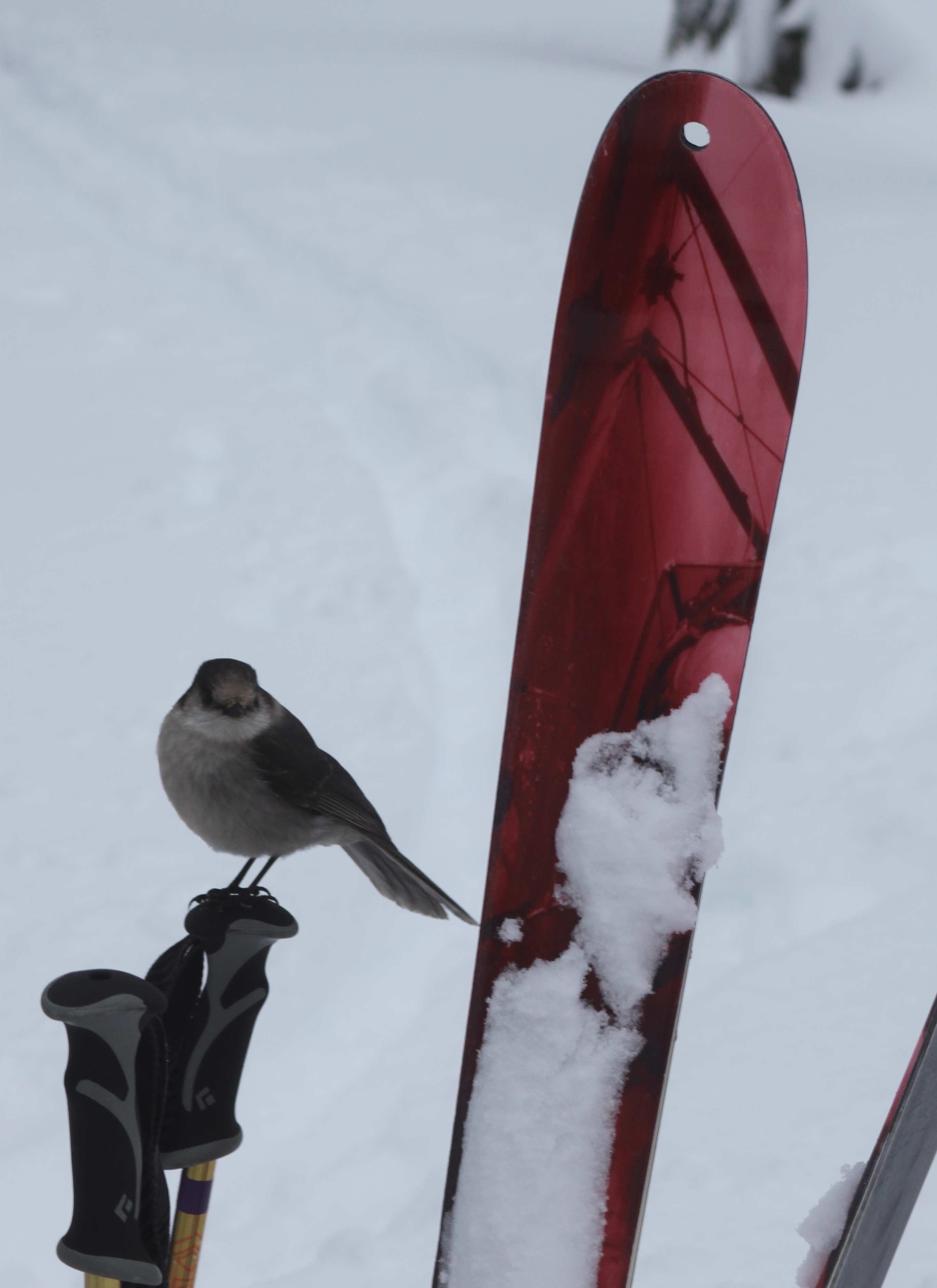
Another year end approaches, and the disease of looking back over what you've done tempts me. But first a picture from today's events, where the old and the new went out in the snow for a day together.

Me and my new ski partner

This year:

I wrote 77 blog posts, started using Twitter and Facebook for current event postings.

I wrapped up my SARDay project, where I wrote about every training event and task that happened in 2010-2011.

I became a SAR Manager, and managed a few searches.

I survived the first year of my son's life.

I attended and presented at SARScene.

My team carried out a large rescue involving a PLB.

Members of my team attempted Mount Logan. A former member summited.

Mike Neilson on Mount Logan

BC Had it's first SAR Volunteer die while on a task.

Only two local accidents were caused by slip and fall on snow, one an injury, the other a fatality.

Next Year:

I'm going to write some more.

I'm going to release some software, expect me to start writing about this soon.

My family is buying a boat.

I will survive another year of my son's life, possibly with some scars.

And finally, I hope next year is a very safe and happy year for everyone. I hope, if I ever meet you, it's not on a rescue. And I hope 2012 is a very boring year for all SAR members.

Posted in Blog Entry | Tagged , | Leave a comment

A Call for Participation

I've been getting feedback. Yes, from time to time someone will approach me and let me know that they like some of the posts I wrote. This feels good; sometimes I think nobody's reading. However, blog writing is mostly a one way thing, I write, and you read, and sometimes some of you comment.

I was thinking how nice it would be if there was some way to incorporate other voices  into the conversation, and I had two ideas.

Guest Writers

The first is that it would be nice of someone else's opinion besides my own could be heard. Now, blogging about SAR is really writing to a very small audience; mostly other SAR people, and some backcountry enthusiasts. And if there's anything I know about those two groups it's this; they have opinions, and they don't all agree with me.

It's not always easy to write a blog; you may have this one really important thing you want to share, and just not have any other good ideas yet. It might seem like a lot of work to start a blog, only to have this one lonely article on there, and you watching your hit counter while you sit in your basement wondering why nobody wants to read what you're writing. Not that I do that.

However, if you could write this one article and share it with a ready-made audience, and it's bundled with other related articles, well that's a lot like publishing in a magazine or something. The site has readers, subscribers, and daily traffic, and you have something to say.

So I'd like to put this invitation out there; if there's any of you have have something to contribute I'd like to hear from you. You write something, and if it fits into the general theme of this blog, you can publish it here. You get full credit can can license the work any way you like (currently everything here is covered under Creative Commons), and you get full credit including links to whatever profile web site you want.

Of course if nobody takes me up on this offer, I'll just keep writing my opinions and you'll just keep reading them. Forever.

A Forum?

Yes, a forum.

I hate forums. I hate logging in, I hate making up a user name and a password, I hate the ads, I hate how they look. I hate having to search through page after page of flaming, uninformed, ignorant people posting stupid comments in order to find the single gem of information I need to get something done.

On the other hand, they are useful for dialogue, and that's something I think is lacking in the SAR community. So my second idea is to install some forum software and invite SAR members from all over the province or country to participate.

I know we already have the BCSARA forum, but in my humble opinion it's under used, difficult and very formal. I am suggesting something simple and a lot less formal, but still useful for interacting for other interested SAR members.

I actually mocked this up a few days back. It actually only took me 45 minutes to install and configure VanillaForums on my server. It doesn't require you to create an account since you can just use a Google, OpenID, Twitter or Facebook account to authenticate.

Anyway, it's a suggestion; I could easily host a forum here, but only if I get some feedback telling me it's worthwhile. I think I'd need between 10 and 20 people who'd "commit" to giving it a try.

Examples

So some examples might be good.

SAR in BC also includes road rescue, which teams on the south coast don't do. I'd like to hear from that aspect of SAR. You might have a particular piece of gear you'd like to review. You might like to send some public feedback to one of the major agencies (like I often do). You might want to point out that there's a trend or pattern in some of the rescues you do. You might just want to tell the story of one of the more interesting searches you've been on.

In the forums, which I envision to be private and not accessible to the general public, you may want to discuss some of the more technical aspects of SAR. What gear to buy, techniques to use, etc. Open up about what your team does and get honest feedback from other teams in order to make SAR safer, and better in BC.

Contact Me.

If you're interested in either of these proposals, contact me.

Posted in Blog Entry | Tagged , | Leave a comment

The Christmas break

When I was in University we would always take advantage of the Christmas break to get out there and do some backcountry skiing. We were poor; we had unreliable vehicles, lots of us either had used equipment, or we rented. This resulted in epic trips where we would spend hours dragging cars out of ditches, suffer the blisters from cold, stiff, badly fitting boots, and have massive equipment failures from completely blown bindings, stripped screws, and skins that would never stick. It was awesome and we enjoyed every minute of it.

I still remember the tale of my friend Jeff on a trip to the Sphinx hut when he lost two screws on one of his bindings. He thought he was being smart when he pirated a screw from the other side to fix it. He write a little story about it titled "The Riddle of the Sphinx", that started with the line "What skis on two skis in the morning, one ski in the afternoon, and no skis in the evening?" That's a long, cold walk out.

Of course, now that I'm not in university any more I know that this time of year is often the worst for skiing. The time around Christmas is the darkest time of the year, and often has the worst weather. But being in university, we chose destinations and made our plans, and because our time was limited we felt that we had to stick with those plans -- this meant that we went out in bad weather and bad conditions regularly because we felt we had to make the best of things. On one occasion I suffered frost nip, and lost the feeling in my fingers for a year and also lost a few toenails from freezing.

Over this Christmas break, choose your destinations wisely. Pay attention to the avalanche bulletin and choose simpler terrain when the hazard is high. Remember that SAR Volunteers are also enjoying the holidays, and while we still respond, there are less of us around this time of year.

Posted in Blog Entry | Tagged , | Leave a comment

The use of Smartphones in SAR

As much as I've written about how you shouldn't use a smart phone for backcountry navigation, and about the general problem of running down the battery and exposing it to cold and wet conditions, under certain circumstances they are an advatage. One of these advantages could be for SAR work.

Why would I recommend smart phones for SAR work and not for general backcountry enthusiasts?

Firstly, SAR members are usually sent on a task in a team of two or three, and a modern SAR team regularly equips each member with a radio. This mean each team of SAR members has multiple phone and radio links to base. Secondly, many SAR tasks, such as the one we did last weekend, are for a defined period of time, and not an extended hike in the wilderness. Finally, SAR teams have support in the form of helicopters, ATVs, and other teams that can provide communications and resupply. We're not in the same situation as small group of hikers or mountaineers; we don't usually require rescue.

Another consideration, which I recommend to all backcountry users,  is that SAR members usually have purpose-built backcountry GPS units. The smart phone is not being used to navigate (usually), which leaves it free for... well for what?

Continue reading

Posted in Blog Entry | Tagged , , , , , | 2 Comments

A Social Media Policy for SAR

If you are rescued by a Search and Rescue team tomorrow, what kind of behaviour would you expect from the team? I know that most people would probably just be grateful to be warm and dry, but the question comes up in the context of social media, and what it means to behave in a professional manner.

Let's say you call an ambulance, and the paramedics come to your house and perform some service. Sure, you're happy that they've come and perhaps saved your life. But how would you feel if one of them took out a camera and snapped your photo? What about later when you saw that photo on the internet via Twitter or Facebook?

That would be unexpected.

Continue reading

Posted in Blog Entry | Tagged , , , , | Leave a comment

Social Media in SAR Management: Getting The Word Out

I've been reading about "SMEM," or Social Media in Emergency Management. It's quite a buzz word, and there's a LOT of talk on the internet about it. Our SAR team has had a few instances where it's been useful, and I'll talk about one context in this post.

Getting the Word Out

On a recent search we were looking for a missing person. The RCMP had put out a press release on their web site about his disappearance, but the local media had not noticed yet. Since this was an urban search, it would be useful for the public to know his description. While in the command truck, we posted a link to the press release on both Facebook and Twitter, and within 20 minutes the local radio was reporting it, and by the next day the information was in the newspaper.

Now what makes this a success story?

The key element of any piece of information is it's veracity -- is it true. On the internet, some information can become "viral" in that it spreads very quickly. News about a missing child is an example of this -- in a recent case of a missing boy in BC it seemed that news of his disappearance was spreading across the country to places where he could not possibly have travelled to. What was troubling about that event was that the information that was being sent was not linked to a verifiable source -- it did not have a citation.

As a SAR team, it's not enough to post the information, you absolutely MUST link back to an authoritative source. Where the information came from is almost as important as the information itself. There are several reasons for this.

Linking to the Source

In the case of the missing man, our team posted that the RCMP had requested us to look for a missing person, and we included the link to the RCMP web site where the press release was posted. We resisted the urge to copy the information wholesale to our own web site, which would have driven traffic there and possibly increased the profile of the SAR team, but at the expense of clarity and veracity.

The reasons for insisting on posting the link to the authoritative source are:

  1. People receiving the tweet or Facebook update could easily verify the information by the link back to the original.
  2. There was no possibility of error introduced by transcription, or typos.
  3. If any of the information changed, it could be changed by the authorities responsible. Updates to the original release often lag of there are many locations that need to be updated.
  4. If any tips come in they should go straight to the police, not the SAR team. The possibility that the information could go "viral" could swamp the team's email and twitter with tips. The police are better suited to deal with this.
  5. Responsibility for the disseminating the information clearly lies with the police.

Information disseminated by a SAR team sometimes has the appearance of coming from an authority, but in BC we derive our authority from the police of jurisdiction. SAR teams have no authority to perform searches or release information without being directed by the police, fire department, ambulance service, or coroner's office.

In particular, any releases of information identifying the subject should be clearly labelled as originating from the relevant authority, and should whenever possible link back to the originating request on the authority's web site.

No SAR team should request that people look for information on their web site, Twitter or Facebook account; that is not SAR's responsibility.

Posted in Blog Entry | Tagged , , , | 2 Comments

Avalanche and other hazards

I probably don't need to tell most readers that Avalanche hazard in the Sea to Sky region is Extreme right now (note this link is to the latest bulletin, so if you're reading this a few days late you'll have to try to find it in the archived bulletins).

Of course there are very few observations this early in the season, but it doesn't take a professional avalanche forecaster to realize that when about a meter of snow falls in one 48 hour period (some forecasts called for 1.5m), and is accompanied by high wind, there's going to be some unstable snow. It is quite rare for the hazard to be this high.

Also in effect is the "upside down" nature of the snowpack -- this last storm came in cold, and warmed up. In fact, the freezing level rose to 1500m, triggering high streamflow advisories; the combination of rain and melting snow packing a double whammy (where "whammy" is a technical term here).

On the North Shore the hazard isn't quite as high, mostly due to the lower elevations; the North Shore mountains only classify as "treeline" on the avalanche bulletin as there is no true alpine terrain. Also, the rain probably fell all the way to the top of those peaks, and although rain on snow causes instability in the short term, once it freezes it's quite stable.

However, the freezing brings with it another hazard, that of a slip and fall on snow. I've written about this hazard extensively, and it's one that the avalanche bulletin doesn't mention even though more people die in this kind of accident in the North Shore than by avalanches -- in fact, almost one person a year dies from a slip or fall on snow in the North Shore.

So I'd like to make an explicit warning in advance of this weekend. There's been a rainfall event that brought rain and wet snow to the peaks of the local mountains. If there's cold weather the rest of this week, keep a look out for a rain crust. Be careful while skiing, boarding or snowshoeing in the backcountry.

Posted in Blog Entry | Tagged , , , , | 1 Comment