Map of SAR Incidents in BC 2011

My good friend Rick Laing, SAR Manager and member of Ridge Meadows SAR and GIS guru sent me a link to a map he published.

It has the locations of all of the SAR teams in BC, and includes all of the incidents from 2011  and 2012 that have spatial coordinates entered into the BC SAR Information System (BCSARIS).

Map of BC SAR Teams and Incidents from 2011 /2012

In Rick's words

Some of the location data (lat/lon, UTM) was on BCSARIS, some I guessed at from the description either in the task report or from the incident summaries and looking it up on Google Earth or in the BC Gazeteer spreadsheet. Many teams didn't include any information at all so the incident location is the hometown of the team (look at Chilliwack!)

All teams in BC are required to enter data into the BCSARIS system, but there are different levels of compliance. From my efforts on the InfoSAR project I can tell that most teams don't enter all their tasks, and many teams don't bother with coordinates.

That's too bad, because maps like the one Rick produced are very useful for planning. For example, books like Robert Koester's Lost Person Behaviour were written by analyzing many years worth of data on searches like these. British Columbia happens to have one of the largest number of SAR incidents per year of any single jurisdiction in Canada or the US (US SAR teams are usually managed on a county-by-county basis by various Sheriffs) and would be an amazing source of data for future reference.

In addition, knowing where people get lost, and what kinds of injuries they sustain could lead to trail or signage improvements. Several years back my team did some trail work that eliminated lost people on a trail in our area.

Rick made the map using ArcGIS, and published it on ArcGIS Explorer Online. The site can take a little while to load so be patient.

The link to the map: BCSARA Member Groups

If anyone has any questions about this map I'd be happy to forward requests to Rick, feel free to contact me or comment below.

Posted in Blog Entry | Tagged , , , , | Leave a comment

Beacons vs Transceivers again

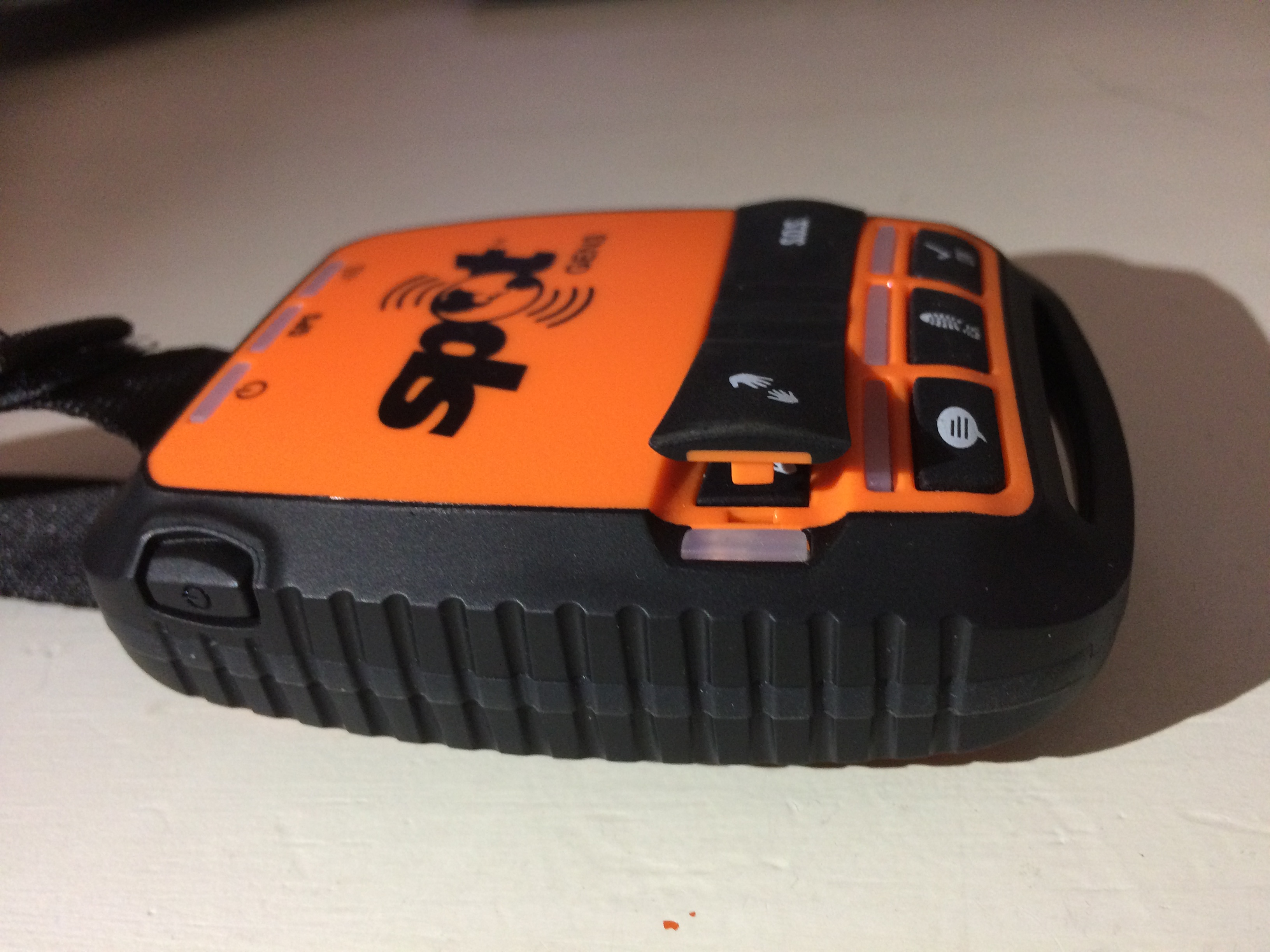
It seems that people are still have trouble telling the difference between a "SPOT Beacon" and an "Avalanche Transceiver"

I wrote about this last year, based on some comments I heard while attending the CAA's Annual conference and AGM. The CAA posted about it again today, which makes me believe they are still encountering users on courses and members of the public who are confused about the terminology.

Let's be clear on  the terminology we're using. We used to refer to "avalanche beacons", but the proper name is avalanche transciever because they can both receive and transmit.

A locator beacon, on the other hand, does not receive, but only transmits it's location to an overhead satellite or radio location system.

I've reproduced the CAA's notice below.

Posted in Blog Entry | Tagged , , , , , | Leave a comment

SAR Teams in BC

It always seems to me that SAR teams outside of the Lower Mainland of BC don't get enough attention. The reasons for this escape me, since some of the most rugged terrain and most incredible rescues happen out there. I get to hear about them since I'm part of the community, but if it's outside of Metro Vancouver, most news agencies just aren't interested.

To give credit where it's due, teams in the Lower Mainland and the Sea-To-Sky have huge call volumes, mostly due to the large populations we serve, and we also pull off our fair share of challenging rescues. However, this is a huge province, and the kinds of rescue we do here are different than elsewhere in BC.

If you'd like a taste of what the rest of BC is doing, take a look at the PEP incident Summaries. Not a week goes by without teams from all over BC responding to tasks big and small. Unfortunately you can't subscribe to them as tweets or as RSS because they're in PDF format.

I've started to build a list of links to SAR resources and agencies in BC, including a list of all of the SAR teams in BC with links to the web pages. Feel free to contact me with any suggestions or corrections to the list. Take some time and check out what the SAR team in your corner of the province is up to.

Posted in Blog Entry | Tagged , , , , | 1 Comment

Sledder Situational Awareness again

It seems someone else is paying attention to the sledder situational awareness problem, and has come up with a handy tool to help people develop skills and make better decisions.

Posted on the SledLink page, the "STOP" tool advises sledders to

  1. Stop in an area free of avalanches, regroup and communicate.
  2. Think about terrain features, and avalanche triggers
  3. Observe weather and snowpack
  4. Plan the route based on the observations

There's a lot more on this, but you should get it from the horse's mouth, no point in me copying it and taking any credit. It's all good advice, and like I wrote previously, it's basically encouraging sledders to stop and make more observations.

Posted in Blog Entry | Tagged , , , , , | Leave a comment

CAA AvSAR Course

As I mentioned via twitter, last month I attended the Avalanche Association's "Avalanche Search and Rescue (AvSAR) seminar in Whistler, BC. I thought I'd write a bit about the course for any SAR personnel who might be considering sending someone to take it. Of course I can only speak for my experience at the course.

The course was three days, the first two being in the classroom and the third being a field day filled with four scenarios.

The first classroom day was spent on "AvSAR" or Avalanche Search and Rescue, with the focus being on the actual response to an avalanche from an Incident Command point of view. This covered communications, managing resources, and using the ICS organization chart and how to assign people to various roles.

The second classroom day consisted of the Medical Aspects of Avalanche Rescue seminar by Dr. Renata Lewis that the CAA has previously delivered at professional development (CPD) sessions. This seminar reviews the latest research on avalanche survival and how to treat avalanche victims, applying triage techniques and transporting subjects. This session also included hands-on training with some medical equipment related to hypothermia treatment, spinal immobilization, and patient transport.

The third day, as mentioned above, was a very full day of avalanche rescue scenarios. This involved applying the techniques learned in the first two days, including resource management, and triage. The final scenario station included using the RECCO system, probing techniques, and a demonstration from a trained CARDA Dog team.

At the outset of the course the instructors were clear that while they were in front of the class instructing us, they recognized that the level of experience in the room dealing with ICS and avalanche rescue probably was greater than the information contained in the course, and they were learning from us just as much as we were from them. This was part of the value of the course from a Ground SAR manager's point of view -- the experience of the fellow students.

Attending the course were Avalanche forecasters working with the Ministry of Transportation, Heli-Ski guides, Ski patrollers, SAR managers and members, Canada Parks wardens, Metro Vancouver watershed managers, and one member of the Canadian Forces from Rescue Squadron 442, CFB Comox. There was an immense depth and breadth of experience in the room, from nuts and bolts rescue, to long range planning and safety, and including a high degree of pre-hospital care experience.

As students we worked together on several tabletop problems, exchanging different views on how to manage the scenarios given to us. Of great value was understanding how different industries perceive avalanche risk and rescue.

An example is that Heli-Ski companies never ski when the weather prevents them from flying, so they always have air support. If an accident happens, the various operations respond to assist each other, and response times are very quick. Ski patrollers and cat ski/snowmobile guides similarly enjoy quick response times. In contrast, SAR team response times can be quite slow because of difficulty accessing terrain, and the conditions that lost or injured subjects find themselves in.

On the flip side, SAR teams have dedicated training and resources specifically for SAR, and SAR only. Most of the other industries have SAR and safety as a part of the operation, and often have to re-purpose resources for the rescue. An example is the radio dispatcher will often function as an operations manager or communications director during a rescue. Dedicated rescue and transportation equipment may be light or minimal as the weights in a helicopter are carefully managed to maximize fuel and the number of customers who can fly. SAR teams will have dedicated resources and specialized for their roles, and since many teams respond to searches several times a year the rescue plans will be well understood by all team members.

SAR is also the only agency in the above list that specialized in searching rather than just rescue. This is an important point because many SAR responses involve travelling in avalanche terrain when there is no actual avalanche reported. All of the training and techniques to manage avalanche risk have to be used, as well as the knowledge and training on how to rescue a team member from a possible avalanche, even though the response may be for a lost or injured subject. From this point of view, SAR spends more time analyzing the transportation of members rather than assuming that a helicopter or snow cat is available.

Another consideration is that SAR members are often called out to search when people are overdue, meaning the response take place at night. This puts SAR managers in the difficult position of weighing avalanche risk, and the inability to make good observations of snow conditions, against the safety of the subject. It's possible a SAR manager would need to hold back searchers if the risk was too high.

I believe that most SAR teams with the possibility of a response into avalanche terrain should send at least one SAR manager on this course. The value is in working with other avalanche professionals, and similarly other industries can learn a lot from a SAR manager knowledgeable in the application of ICS to a rescue. Teams should also consider sending senior members as well.

Posted in Blog Entry | Tagged , , , , , , , | Leave a comment

Situational Awareness: Sledder vs Skier

In my last post on this subject I wrote about how skiers have an advantage over sledders in that they have more opportunity to observe conditions as they travel through terrain. Today, some observations on the flip side of the coin.

One of the guys on my SAR team just got back from the CAA ITP Level 1: Snowmobile course in Revelstoke, BC. His comment on the course was that he didn't understand how "you guys" (meaning skiers) could do what they did on the course, as he described the distances travelled, and the variety of terrain they toured through.

This is the sledder's view of the world. While a skier might travel 20km in a day, someone on a snowmobile will do that in a few minutes. Their opportunity is this; they can see much more terrain than a skier can in one day. It's also their risk (as I wrote n the last post).

Skiers can chose an area depending on the conditions, and be happy in that area for a day. Sledders, with greater speed, could easily get bored staying in the "safe" zone.

The key to maintaining situational awareness while snowmobiling is this; use your strengths (speed, distance) to counter your weaknesses (lack of opportunity for observations). Stop, and poke in the snow -- learn a few analytical skills for studying the snowpack. You can't hear "whumphs," and often won't notice shooting cracks or other obvious signs of snow instability. Make up for it by being able to stop, dig a quick pit, and write down what you see, even if it's a sketch. Temember to record the location, elevation, and aspect (use your GPS and compass.

A sledder's avalanche field book could easily be huge by the end of the season!

Avalanche Field Notebook

As the day and the season progresses, a sledder's knowledge of the terrain and the snowpack history could easily be better than a skier's, but only if they take the time to make the observations.

Posted in Blog Entry | Tagged , , , , , | 3 Comments

Older Map of Pitt Lake

We came across this map of Pitt Lake in the SAR Archives the other day. Interesting for the place names that aren't on more modern maps. Funny how the mountains look like cones.

Map of Pitt Lake

Posted in Blog Entry | Tagged | Leave a comment

William Fisher Search Review

William Fisher Search Review

The running joke at Comox Valley SAR is that if we're having a social event bring your gear: we're about to have a task. True to form, our last call out occurred on the way to our annual Christmas party.

Mr. William Fisher had left a doctor's appointment in Campbell River, BC on Thursday Dec 1st and had not returned home to Port Hardy. Mr. Fisher's family reported him missing after being unable to reach him Friday. After investigation by the RCMP, it was determined that Mr. Fisher's debit card had been used at the Sayward Junction store north of Campbell River. His car, a white 1995 Chrysler Concord had been seen at the store as well.

Campbell River SAR was activated by the RCMP to help in the search for Mr. Fisher. Based on the information at hand, SAR was requested to search Highway 19 from Sayward to Port Hardy, a distance of approximately 180 kilometers. In the event Mr. Fisher had an accident and was unable to be seen from the road, search crews would likely be able to find his vehicle by walking along the highway.

Due to the distances involved, Campbell River SAR requested mutual aid assistance from Comox Valley SAR and from PEP Air, which has a plane based in Port McNeill.

During the Christmas party, the search managers were already making plans for the next day's search. Comox Valley SAR had recently had an intake of Members-In-Training and the managers requested activation of these MITs to help in the pending road search.

I suggested that the communications crew spend some time after the Christmas party programing our radios to utilize amateur radio frequencies on the amateur radio Island Trunk System. Discussions regarding communications problems over the past year had put CVGSAR on the path to using amateur radio and this search, with its vast search area, would be a perfect application for amateur radio in a SAR operation.

After a few hours of reprogramming mobile, handheld and truck radios, I turned in after midnight to get some rest before meeting the 0600 marshal time with everyone else.

Sunday December 4th

Early morning saw approximately 24 CVGSAR members arrive for the task including Search Managers, team leaders, GSAR members and Members-in-Training. Travelling to Campbell River by carpool, we briefed with the Campbell River search manager on the specifics of the search and then continued on to the first command location at Keta Lake, a rest area north of Sayward on Highway 19.

During the travel to Keta Lake, Campbell River SAR was notified of another task, this time a group of missing sledders out of Sayward. Later on in the day, the sledders were found by RCMP and it turns out they had meant to spend the night outdoors.

Once located at command, teams of 3 (two searchers, one driver) were sent on assignment, basically walking both sides of Highway 19 for seven kilometer stretches, examining ditches and embankments for any sign of Mr Fisher or his vehicle. One team from Campbell River SAR was dispatched on bicycle and was given 20km stretches of highway to cover. As each team finished their portion of highway, they were directed to leap frog the next team north and continue with another portion of highway.

During the highway searches, each team marked the start and end points of their highway portion with three SAR ribbons marked with the date/time, team name and task assignment. This was to minimize confusion between teams on the road and to ensure every inch of highway was searched.

As a trained amateur radio operator, I had volunteered for the post of radio operator in the command post. Two CVGSAR members with amateur radio certificates were dispatched with the search teams along the highway and monitored the Island Trunk System and PEPSAR1, the task working channel. At any time of the day, Command was able to utilize the Island Trunk System and reach the amateur operators in the field. These operators were then able to talk to teams closest to them via a relay on PEPSAR1 and get status reports or give out new task assignments.

Command was moved twice to Nimpkish Camp north of Woss and Seven Hills Rest Area north of Port McNeill in order to stay closer to the teams as they travelled further north from Sayward.

One team was dispatched to drive Highway 30 to Port Alice, though this was considered outside of the target search area. One team did cover a portion of Highway 30 on foot, but the entire highway was not walked due to darkness arriving with an early sunset.

RCMP “Air 8” and a Cessna from PEP Air had also been flying long search patterns close the highway, while RCMP members had been driving logging mains originating at Sayward in the off chance Mr. Fisher had taken a wrong turn or had decided to drive down a logging road.

At the end of the day on December 4th, nothing had been found in connection to Mr. Fisher or his vehicle. Search Management travelled to the Port Hardy detachment of the RCMP to brief the officer in charge. Following the search managers return to Command, teams were debriefed and requested to return the following day to search Highway 19 from Campbell River to Sayward. Perhaps he had gone off the highway south of Sayward?

Monday December 5th

Comox Valley SAR members again marshaled at 0600 and one of the Comox Valley search managers assumed command of the task as no Campbell River SAR managers were available.

Because Monday is a normal work day and fewer SAR members would be available, mutual aid calls were placed the previous evening and teams arrived at Campbell River SAR's hall for 0700. Teams from Nanaimo, Arrowsmith, Alberni Valley and West Coast SAR complimented the teams from Comox Valley and Campbell River. One search manager from Arrowsmith SAR helped out in the command post.

As amateur radio was so successful in keeping teams in touch with command, the same tasking was undertaken with amateur radio operators spread out with teams along the highway.

For the assignments, the decision was made to send some teams directly north to Port Hardy and work southbound on Highway 19, checking likely areas to search. The assignment was to still walk the highway but avoid or skip areas where the terrain was clearly visible and unlikely to hide a large car, such as rock-faces and grassy shoulders.

Other teams were tasked to walk or bicycle both sides of the highway, but starting at the Elk Falls Paper Mill north of Campbell River and working their way north towards Port Hardy. At this point, Command moved to Roberts Lake, a rest area approximately 30 kilometers north of Campbell River.

I was assigned to the field this day, with another amateur radio SAR member taking my place in the command post. I worked personally with two members from Alberni Valley SAR.

During this search day, RCMP “Air 8” was again in the air for the afternoon though PEP Air did not get off the ground in Port McNeill or Nanaimo due to fog and weather concerns. Citizens on Patrol and RCMP from Sayward were also active on this day, searching every logging road to intersect Highway 19 to a distance of 5 kilometers.

After searching the highway and leap-frogging all day with other teams, the call was made to suspend searching around 1630. Search teams working northbound and southbound on Highway 19 had met around the south end of Nimpkish Lake. Command ordered all teams to return to base, which had moved to Keta Lake Rest Area by this time.

Once all teams had returned to command at Keta Lake, we were informed that the RCMP had received a reliable tip of a white car travelling on logging roads north of Campbell River, but south of Sayward. Though this was a few days previous, RCMP considered this a valid tip and search teams were to return in the morning to perform a logging road search.

Tuesday December 6th

Tuesday again brought mutual aid teams to Campbell River SAR's hall for a 0700 marshal time. Due to scheduling conflicts, a search manager was not available from Campbell River or Comox Valley so a search manager from Arrowsmith SAR was pressed into service. Another manager from Cowichan Valley SAR assisted.

With the information from the witness, RCMP and search management decided to search the logging roads that might lead from the point last seen. Search teams comprising members from Campbell River, Comox Valley, Alberni Valley, Arrowsmith and Nanaimo SAR were divided into teams comprising two members per vehicle, with two vehicles per team.

Assigned to various sections of logging road, one vehicle per team would leave the highway and drive to end of the assigned road, mark with ribbon and return to the highway, searching all spur roads where a car such as Mr. Fisher's may have travelled. The second vehicle on the team was to search all spur lines from the highway until meeting up with the first part of the team. Upon meeting each other, the task would be concluded and the full team would return to base for another assignment.

Amateur radio was employed less this day, primarily due to the team's proximity to command. It was used, but nowhere near the extent of the previous two days. Teams were generally able to reach command or relay through another team using PEPSAR1.

I was assigned to team Charlie 1 and was assigned to search the Pye Lake West logging road, searching all spur roads and campsites along the way. During our search of the Pye Lake Forest Recreation site, we noticed a large white object on the other side of the lake but we suspected it was a large rock or cliff face. Gaining a higher vantage point, we were clearly able to determine it was a rock. Note to self: Bring binoculars.

After the completion of our task and return to base, we were debriefed by the search manager and were told that Mr. Fishers vehicle had been found by members of the general public on Highway 30, the road to Port Alice. Subsequent investigation by the RCMP discovered Mr. Fisher deceased inside his vehicle and SAR was put on standby for a possible embankment recovery.

Summary

From the PEP Incident Summary, Dec 5, 2011 - Dec 11, 2011

40 Campbell River, Comox, Nanaimo, Cowichan, Alberni Valley Rescue and Westcoast SAR members and 4 PEP Air continued the search for a missing vehicle with occupant between Sayward & Port Hardy. SAR was stood down after subject was located deceased in the vehicle where it had gone over an embankment.

In the end, no embankment recovery was required and SAR was stood down by the RCMP.

Unfortunately the task had an undesirable result, but hopefully the family has some closure from finding him. My heart goes out the family.

From a SAR perspective, this task was a huge undertaking and covered a massive piece of Vancouver Island.

Search teams walked from Campbell River to Port Hardy, a distance of 230 kilometers, some of it twice.

Comox Valley SAR volunteers committed over 600 person hours to this task, let alone the contributions of the other teams from Campbell River, Cowichan, Arrowsmith, Nanaimo, Alberni Valley, and West Coast SAR. RCMP, PEP Air, Citizens on Patrol and Emcon Services also contributed significant time searching and patrolling the roads and highways of the North Island.

One highlight of this task was the successful use of amateur radio. Amateur radio and the Island Trunk System made this search happen. Search managers were able to keep in touch with all teams at most times and this allows for a greater degree of safety. Walking along a two lane highway in the winter with logging trucks and fast traffic isn't the safest of jobs.

Comox Valley will now be moving full speed ahead with amateur radio training and equipment purchases, in part because this task demonstrated the value of amateur radio for future assignments.

I'd like to thank the Island Trunk System and amateur radio operators everywhere for allowing uninhibited use of the ITS during this search.

Merrick Grieder, VA7VM
Comox Valley Ground Search & Rescue
Comox Valley Emergency Program - Communications

Posted in Blog Entry, Guest Post | Tagged , , , , , , , | Leave a comment

Guest Post tomorrow

A few weeks ago, the tragic story of a search on Vancouver Island was reported in the news. From the information reported in the media, the search seemed to be fairly unique in terms of the distances involved and the communications issues that must have been overcome. A few days later I tweeted a report I had read about how amateur radio had been used to coordinate the search. This piqued my interest even more; 3 days of searching, 300km of roads, lack of cell service... sounds like a logistical nightmare!

I asked an acquaintance of mine who was involved in the search to write up what happened from his point of view, and he agreed to do so.

Tomorrow I'll post the report, written by Merrick Grieder of Comox Valley SAR. As with all search reports I write, we've edited this one so that only information about the subject that was already released to the press by the RCMP is included. The report is from one person's point of vide, someone involved in the search. Other SAR members may have different views, and they are encouraged to comment if they feel like contributing.

Posted in Blog Entry | Tagged , , , | Leave a comment

Archived Avalanche Bulletins

I've always wondered why the CAA's web site doesn't have a link to the archived avalanche bulletins. I could be wrong, but I just can't find it.

It's not a normal thing to want to go back and look at the old bulletins, but let's say I was going to head into an area that I don't usually ski in. I would find it useful to read up on what's been happening there, and the bulletins are an excellent summary of weather information, as well as primary observations on avalanche activity. For a non professional, it's the only way to get access to this data (professionals can get it through the InfoEx).

This week I'm running an avalanche rescue tabletop exercise for our team. It involves three avalanche response scenarios in our area. The idea is that the SAR managers and team leaders get together and plan how the reponse wouldtake place based in the information I give them in the scenario. In the process they use the Avalanche Rescue Response Plan. At the end of the exercise we review the plan for completeness and modify it according to the sugestions the team gives me.

For the excercise I chose three dates in the past month or so for the imaginary incidents to occur. However, I wanted to provide the bulletin and weather forecasts for those dates to make the scenario as real as possible.

It turns out there is an easy way to access the old bulletins if you need to. Here's how:

  1. Go to the page for the avalanche bulletin you are interested in. For me it was Sea To Sky
  2. Click on the RSS link near the top right after the title of the bulletin. The icons looks like this:
  3. Depending on what web browser you're using you'll see different things. For these instructions, use Google Chrome. You may be able to do this using a feed reader (see below). In my brower (Chrome) I get a choice to subscribe to the RSS feed using Google Reader.
  4. Once in Google Reader I can scroll back through all of the previous bulletins and retrieve any one I like.

You may be able to use a different feed reader than Google Reader. This does not seem to work in Internet Explorer or Firefox because they, like the CAA, assume you're only interested in the latest bulletin. You need a reader that will let you scroll back through previous bulletins.

If anyone has any other method they know of to get the previous bulletins, let me know in the comments below.

Posted in Blog Entry | Tagged , , | Leave a comment